
Salinlahi-Bago Galeriya
Heritage Treasures of the Philippines
About
The artifacts featured in this online museum are accommodated by the National Museum of the Philippines. The information for this exhibition is acquired with the help of the National Museum Central Archives and Library and mentioned sources. All following text about the galleries come from the NMP website.
Bago-Bago Museo’s exhibit “Salinlahi-Bago: Heritage Treasures of the Philippines” is an online gallery dedicated to the rich culture of the Philippines from pre-colonial to modern times. In our gallery there is a mix of items from the NMP-Anthropology, which is curated to be shown to a new age, where it is accessible for all.
Floors
2
Gallery 3 - Palayok
The exhibit “Palayok: The Ceramic Heritage of the Philippines” is a recently opened gallery dedicated to the rich ceramic tradition of the Philippines from the earliest appearance of pottery in the region in the Neolithic (c. 4200 years ago) to the contemporary period. The exhibit highlights the significant role of ceramics in the history of Philippine society and culture. It also showcases the outstanding ceramic types and forms found in different archaeological sites, demonstrating the amazing craftsmanship of past ceramic-producing communities. It displays the various uses of ceramics from cooking pots to mortuary vessels. The gallery has several sections from the initial appearance of ceramics during the Neolithic Period to its widest variation and expansion during the Metal Age, followed by the introduction of foreign ceramics in the Philippines and eventually the contemporary production and use of pottery at present.
3
Gallery 6 - Biyay
Biyay is an Ayta term for life. This gallery features the National Ethnographic Collection gathered from 1903 to the present which aims to provide an overview of the previous studies and documentation by early ethnographers and researchers on the Negrito groups. It presents their direct and deep connections with nature reflected in their material cultures and shows their current situations/conditions amidst the degradation and annual thinning of their home—the rainforest. This gallery also highlights two of the earliest human remains found in the Philippines: the skull cap and the fossilized right tibia. Both were retrieved during archaeological excavations in Tabon Cave in Quezon, Palawan in the 1960s and in 2000, respectively.
Kaban sa Lahi Gallery
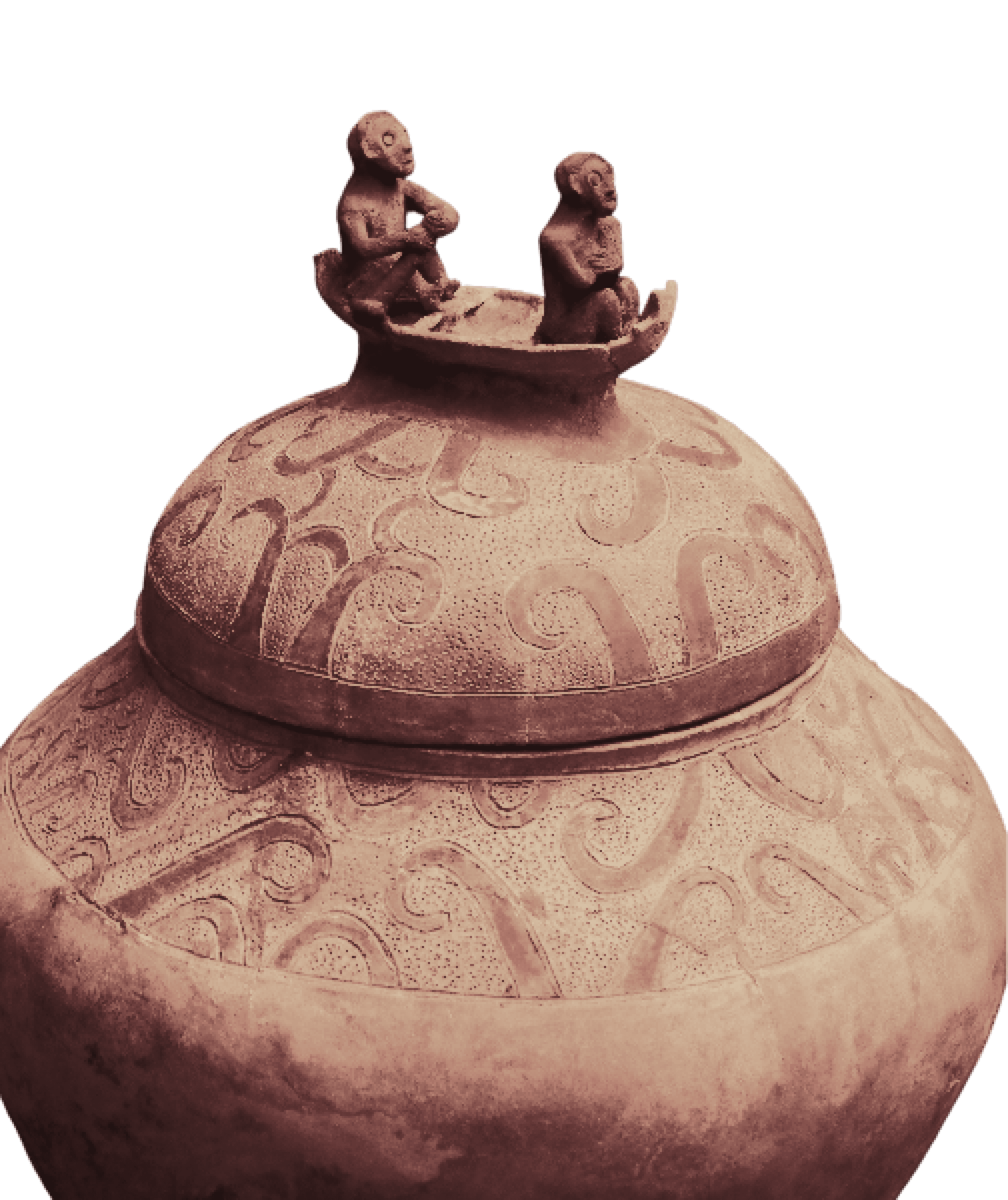
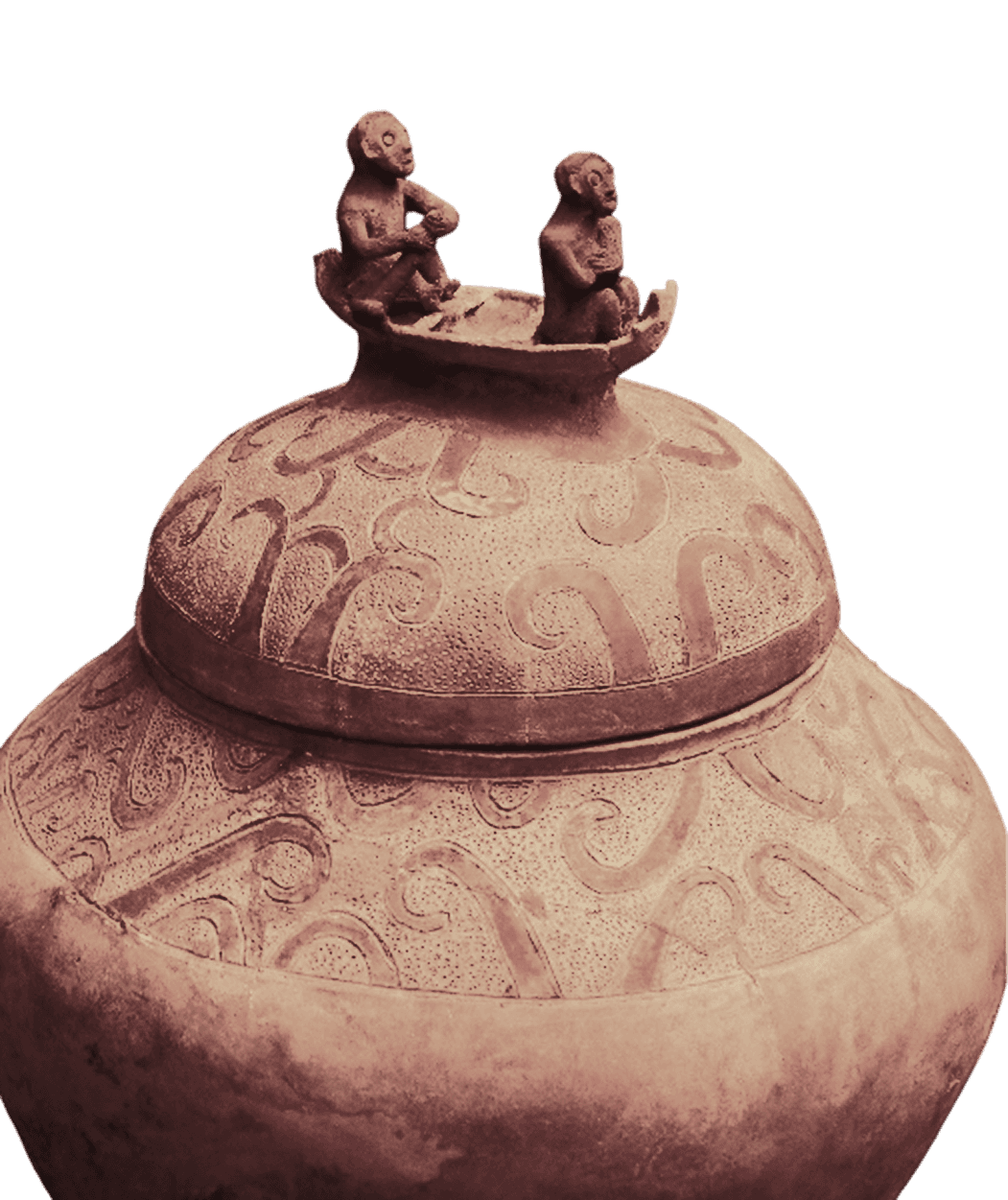
The “Kaban ng Lahi: Archaeological Treasures” gallery is one of the long running exhibitions at the National Museum of Anthropology. It was installed in celebration of the centennial of Philippine Independence in 1998. This gallery is architecturally designed to simulate a cave setting, where most of the burial objects exhibited were discovered.
The gallery highlights the past burial traditions and remarkable craftsmanship of past Philippine societies about 2,500 to 1,000 years ago. It features the mortuary potteries from Ayub Cave in Pinol, Maitum, Saranggani Province (formerly South Cotabato) and a diorama that shows how the burial jars were found arranged inside the cave by archaeologists. The Maitum anthropomorphic burial potteries, which are secondary burial vessels shaped into human figures in various facial expressions, are presented in this exhibit together with wooden dugout coffins from Banton in Romblon, limestone urns, and a collection of pabaon or associated burial goods.
4
Gallery 7 - Rice, Biodiversity, and Climate Change
This gallery features collections on rice from the NMP and Philippine Rice Research Institute (PhilRice) evoking its significance in the Filipino culture, in terms of science, traditional knowledge and heritage systems. It also aims to support the country’s continuing campaign for the Philippines to be self-reliant on rice through responsible rice consumption. It features different types of bulul (granary idol) which are used in rituals associated with rice production and other material cultures used in planting, harvesting, processing, and storing rice.
Gallery 8 - Hibla ng Lahing Filipino
This gallery showcases the traditional textiles produced by various indigenous and cultural communities in the Philippines. It tells the story of how these textiles were made, the materials in making the cloth, and the technologies they used. On display are different traditional textiles, looms, natural fibers, and dyes. The gallery features a death blanket called kinuttiyan used by the highest members of the Ifugao community known as the kadangyan and the Banton cloth fragments, the oldest textile collection of the NMP and a National Cultural Treasure.
Gallery 9 - Entwined Spheres
The gallery acknowledges and honors local basket and mat weavers in the different regions of the country. It highlights the significance of baskets and mats as part of both tangible and intangible Filipino cultural heritage through the different materials, techniques used, and the designs incorporated in them, as entwined in their functions as accessories and costumes, containers of both secular and sacred objects, and conveyors in fishing, agriculture, as well as in most daily activities.
BAGO-BAGO MUSEO
Bago-Bago Museo is a national digital museum, with 360° photogrammetry models. Our goal is to help foster a space of knowledge and linking our past and our present. We are currently hosting artifacts from the National Museum of Anthropology, under Salinlahi-Bago Galeriya.
QUICK LINKS
CONTACT
Aiken Marquez
Email: 202201080@iacademy.edu.ph
Phoebe Dacayo
Email: 202201084@iacademy.edu.ph
Rania Pucan
Email: 202201112@iacademy.edu.ph
Chloe Villania
Email: 202201004@iacademy.edu.ph
This is a capstone project for iACADEMY (SY 2025-2026) for Multimedia Arts and Design
BAGO-BAGO MUSEO
QUICK LINKS
CONTACT
Aiken Marquez
Email: 202201080@iacademy.edu.ph
Phoebe Dacayo
Email: 202201084@iacademy.edu.ph
Rania Pucan
Email: 202201112@iacademy.edu.ph
Chloe Villania
Email: 202201004@iacademy.edu.ph
This is a capstone project for iACADEMY (SY 2025-2026) for Multimedia Arts and Design
Bago-Bago Museo is a national digital museum, with 360° photogrammetry models. Our goal is to help foster a space of knowledge and linking our past and our present. We are currently hosting artifacts from the National Museum of Anthropology, under Salinlahi-Bago Galeriya.

Bago-Bago Museo
Salinlahi-Bago Galeriya
Heritage Treasures of the Philippines
About
The artifacts featured in this online museum are accommodated by the National Museum of the Philippines. The information for this exhibition is acquired with the help of the National Museum Central Archives and Library and mentioned sources. All following text about the galleries come from the NMP website.
Bago-Bago Museo’s exhibit “Salinlahi-Bago: Heritage Treasures of the Philippines” is an online gallery dedicated to the rich culture of the Philippines from pre-colonial to modern times. In our gallery there is a mix of items from the NMP-Anthropology, which is curated to be shown to a new age, where it is accessible for all.
Floors
2
Gallery 3 - Palayok
The exhibit “Palayok: The Ceramic Heritage of the Philippines” is a recently opened gallery dedicated to the rich ceramic tradition of the Philippines from the earliest appearance of pottery in the region in the Neolithic (c. 4200 years ago) to the contemporary period. The exhibit highlights the significant role of ceramics in the history of Philippine society and culture. It also showcases the outstanding ceramic types and forms found in different archaeological sites, demonstrating the amazing craftsmanship of past ceramic-producing communities. It displays the various uses of ceramics from cooking pots to mortuary vessels. The gallery has several sections from the initial appearance of ceramics during the Neolithic Period to its widest variation and expansion during the Metal Age, followed by the introduction of foreign ceramics in the Philippines and eventually the contemporary production and use of pottery at present.
3
Gallery 6 - Biyay
Biyay is an Ayta term for life. This gallery features the National Ethnographic Collection gathered from 1903 to the present which aims to provide an overview of the previous studies and documentation by early ethnographers and researchers on the Negrito groups. It presents their direct and deep connections with nature reflected in their material cultures and shows their current situations/conditions amidst the degradation and annual thinning of their home—the rainforest. This gallery also highlights two of the earliest human remains found in the Philippines: the skull cap and the fossilized right tibia. Both were retrieved during archaeological excavations in Tabon Cave in Quezon, Palawan in the 1960s and in 2000, respectively.
Kaban sa Lahi Gallery
The “Kaban ng Lahi: Archaeological Treasures” gallery is one of the long running exhibitions at the National Museum of Anthropology. It was installed in celebration of the centennial of Philippine Independence in 1998. This gallery is architecturally designed to simulate a cave setting, where most of the burial objects exhibited were discovered.
The gallery highlights the past burial traditions and remarkable craftsmanship of past Philippine societies about 2,500 to 1,000 years ago. It features the mortuary potteries from Ayub Cave in Pinol, Maitum, Saranggani Province (formerly South Cotabato) and a diorama that shows how the burial jars were found arranged inside the cave by archaeologists. The Maitum anthropomorphic burial potteries, which are secondary burial vessels shaped into human figures in various facial expressions, are presented in this exhibit together with wooden dugout coffins from Banton in Romblon, limestone urns, and a collection of pabaon or associated burial goods.
4
Gallery 7 - Rice, Biodiversity, and Climate Change
This gallery features collections on rice from the NMP and Philippine Rice Research Institute (PhilRice) evoking its significance in the Filipino culture, in terms of science, traditional knowledge and heritage systems. It also aims to support the country’s continuing campaign for the Philippines to be self-reliant on rice through responsible rice consumption. It features different types of bulul (granary idol) which are used in rituals associated with rice production and other material cultures used in planting, harvesting, processing, and storing rice.
Gallery 9 - Entwined Spheres
The gallery acknowledges and honors local basket and mat weavers in the different regions of the country. It highlights the significance of baskets and mats as part of both tangible and intangible Filipino cultural heritage through the different materials, techniques used, and the designs incorporated in them, as entwined in their functions as accessories and costumes, containers of both secular and sacred objects, and conveyors in fishing, agriculture, as well as in most daily activities.
Gallery 8 - Hibla ng Lahing Filipino
This gallery showcases the traditional textiles produced by various indigenous and cultural communities in the Philippines. It tells the story of how these textiles were made, the materials in making the cloth, and the technologies they used. On display are different traditional textiles, looms, natural fibers, and dyes. The gallery features a death blanket called kinuttiyan used by the highest members of the Ifugao community known as the kadangyan and the Banton cloth fragments, the oldest textile collection of the NMP and a National Cultural Treasure.