Click and drag to move the item around. To zoom into the item, shift and scroll.
Flat-bottomed
burial Jar
Bacong, negros oriental
200-400 CE
Palayok Gallery
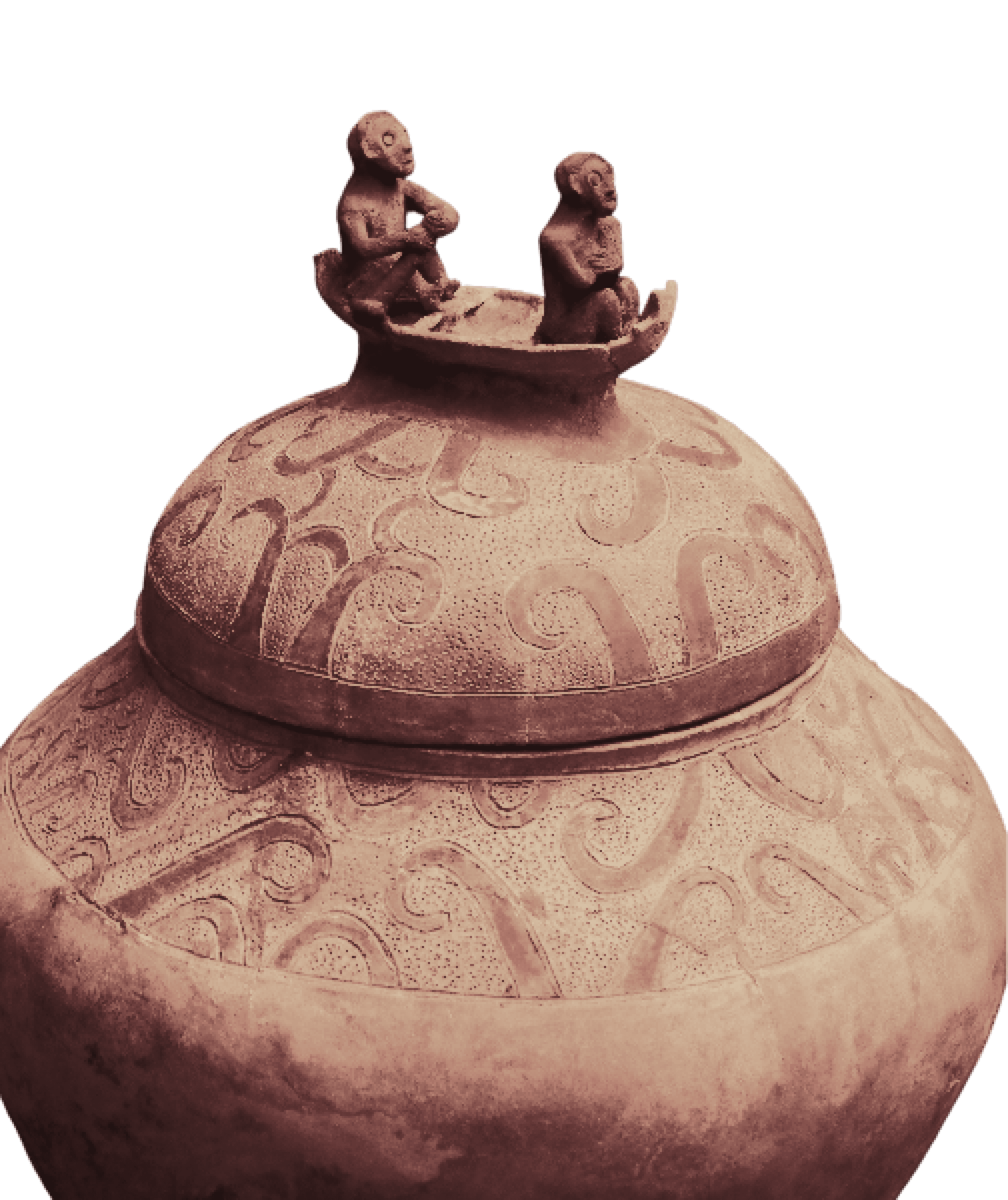
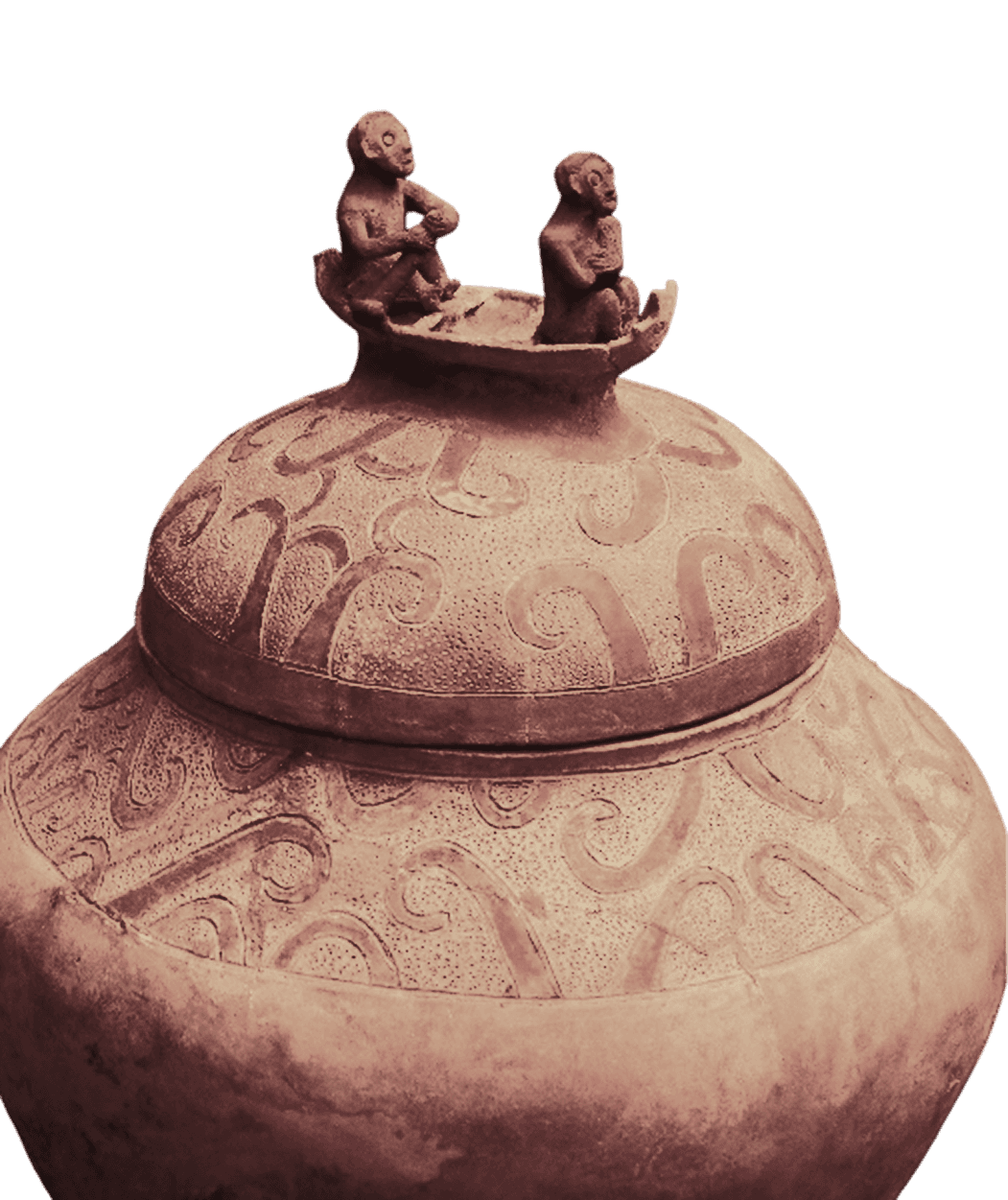
The jar is 80-90 centimeters tall and 40-50 centimeters wide, with elaborate ornaments on the lid, such as the double row of scalloped cut-out edges along the rim with 4 notches. It is found in the Bacong jar burial sites, located in southeastern Negros island in Central Philippines.
Burial Jars are commonly used in funerary traditions during the Metal Age. The differing sizes showcase how the deceased are buried, usually with huge sizes it can fit a full body, but with this jar, the practice of reburying skeletal remains in a tinier container is at practice here. This is called the second burial. The funerary arrangements at the Bacong burial sites do not indicate social differentiation, suggesting a bond between people in the early communities.
The acidic nature of the soils in surrounding areas, from the Bacong region being in the Cuerdos de Negros volcanic system, have led to poor preservation of organic material in the burial sites. However information about the Bacong jar burial sites still contain useful information that stood the test of time.
Bacong has been known to archaeologists as a significant Metal Age site (between 2500 to 1000 BP) as early as the 1970s, when treasure hunters initially discovered the graves and sold them as “antique objects” looted from the sites. To stem the loss of information through pillaging during that period, archaeologists from Silliman University led by Lionel Chiong, and the University of San Carlos led by Rosa C.P. Tenazas eventually excavated some of the jar burial sites.
References:
Ladrido, R.C.. (2021, November 20). Covid-19 recalls precolonial burial practices. VERA Files. https://verafiles.org/articles/covid-19-recalls-precolonial-burial-practices
Cuevas, N., & Dizon, E. (2015, July 10). EurASEAA15: 15th International Conference of the European Assn of Southeast Asian Archaeologists. https://nomadit.co.uk/conference/euraseaa15/paper/25668
National Museum of the Philippines. (2020, December 1). For this week’s #MuseumFromHome series featuring #TrowelTuesday, let us take a look at the prehistoric Jar Burials of Bacong. [Status update]. Facebook. https://web.facebook.com/nationalmuseumofthephilippines/posts/for-this-weeks-museumfromhome-series-featuring-troweltuesday-let-us-take-a-look-/3821249434566013/?_rdc=1&_rdr#
Related Artifacts:
BAGO-BAGO MUSEO
Bago-Bago Museo is a national digital museum, with 360° photogrammetry models. Our goal is to help foster a space of knowledge and linking our past and our present. We are currently hosting artifacts from the National Museum of Anthropology, under Salinlahi-Bago Galeriya.
QUICK LINKS
CONTACT
Aiken Marquez
Email: 202201080@iacademy.edu.ph
Phoebe Dacayo
Email: 202201084@iacademy.edu.ph
Rania Pucan
Email: 202201112@iacademy.edu.ph
Chloe Villania
Email: 202201004@iacademy.edu.ph
This is a capstone project for iACADEMY (SY 2025-2026) for Multimedia Arts and Design
To click, drag, and zoom in, use two fingers.
Flat-bottomed burial Jar
Bacong, negros oriental
200-400 CE
Palayok Gallery
The jar is 80-90 centimeters tall and 40-50 centimeters wide, with elaborate ornaments on the lid, such as the double row of scalloped cut-out edges along the rim with 4 notches. It is found in the Bacong jar burial sites, located in southeastern Negros island in Central Philippines.
Burial Jars are commonly used in funerary traditions during the Metal Age. The differing sizes showcase how the deceased are buried, usually with huge sizes it can fit a full body, but with this jar, the practice of reburying skeletal remains in a tinier container is at practice here. This is called the second burial. The funerary arrangements at the Bacong burial sites do not indicate social differentiation, suggesting a bond between people in the early communities.
The acidic nature of the soils in surrounding areas, from to the Bacong region being in the Cuerdos de Negros volcanic system, have led to poor preservation of organic material in the burial sites. However information about the Bacong jar burial sites still contain useful information that stood the test of time.
Bacong has been known to archaeologists as a significant Metal Age site (between 2500 to 1000 BP) as early as the 1970s, when treasure hunters initially discovered the graves and sold them as “antique objects” looted from the sites. To stem the loss of information through pillaging during that period, archaeologists from Silliman University led by Lionel Chiong, and the University of San Carlos led by Rosa C.P. Tenazas eventually excavated some of the jar burial sites.
References:
Ladrido, R.C.. (2021, November 20). Covid-19 recalls precolonial burial practices. VERA Files. https://verafiles.org/articles/covid-19-recalls-precolonial-burial-practices
Cuevas, N., & Dizon, E. (2015, July 10). EurASEAA15: 15th International Conference of the European Assn of Southeast Asian Archaeologists. https://nomadit.co.uk/conference/euraseaa15/paper/25668
National Museum of the Philippines. (2020, December 1). For this week’s #MuseumFromHome series featuring #TrowelTuesday, let us take a look at the prehistoric Jar Burials of Bacong. [Status update]. Facebook. https://web.facebook.com/nationalmuseumofthephilippines/posts/for-this-weeks-museumfromhome-series-featuring-troweltuesday-let-us-take-a-look-/3821249434566013/?_rdc=1&_rdr#
Related Artifacts:
BAGO-BAGO MUSEO
QUICK LINKS
CONTACT
Aiken Marquez
Email: 202201080@iacademy.edu.ph
Phoebe Dacayo
Email: 202201084@iacademy.edu.ph
Rania Pucan
Email: 202201112@iacademy.edu.ph
Chloe Villania
Email: 202201004@iacademy.edu.ph
This is a capstone project for iACADEMY (SY 2025-2026) for Multimedia Arts and Design
Bago-Bago Museo is a national digital museum, with 360° photogrammetry models. Our goal is to help foster a space of knowledge and linking our past and our present. We are currently hosting artifacts from the National Museum of Anthropology, under Salinlahi-Bago Galeriya.